What metal and grade?
Share the grade and stock condition. The available process and cut result vary with the material.

Process guide
Let the drawing, edge requirement and next operation decide—not a blanket rule about which process is “better”.
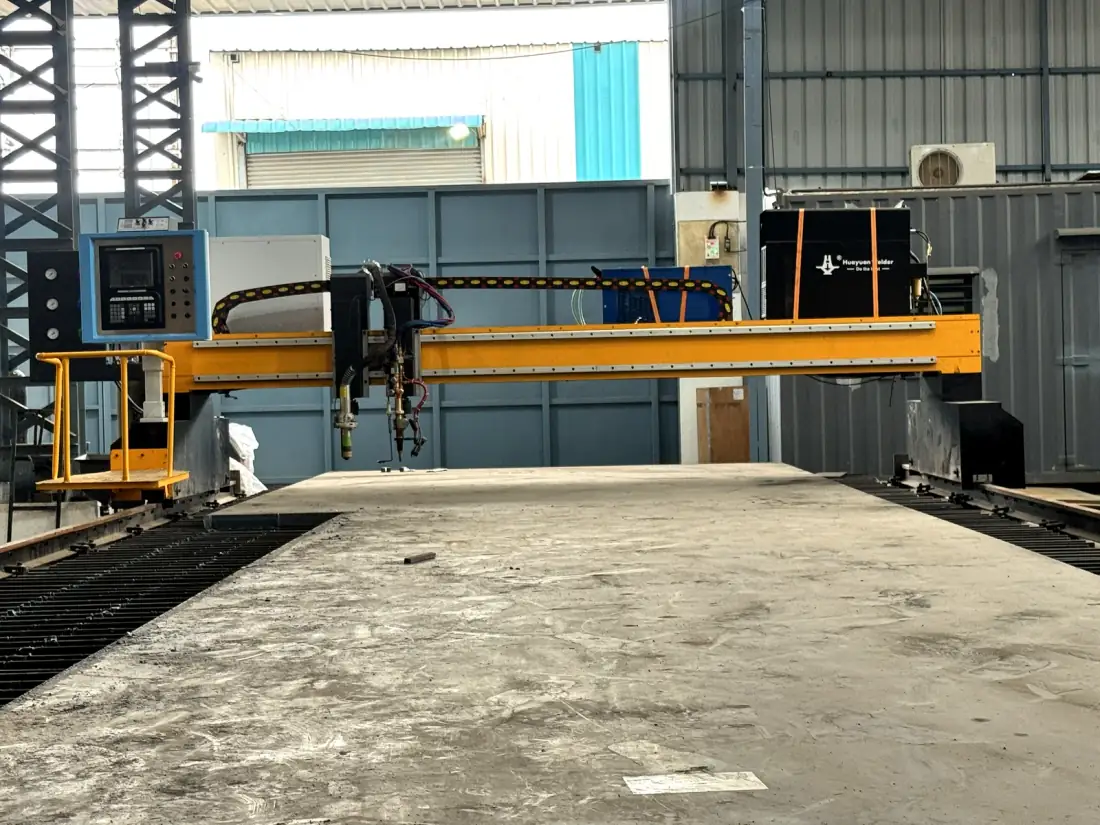
The practical distinction
Laser cutting is often selected when a drawing needs fine details and tight edge expectations. Plasma cutting is an established option for conductive metal plate, particularly when the cut part will be fabricated or finished afterward. Actual cut quality, tolerance and price depend on the machine, settings, material and geometry.
Decision points
These factors help a supplier decide whether plasma, laser or another cutting route fits the job.
Share the grade and stock condition. The available process and cut result vary with the material.
Give the nominal thickness and required quantity; do not infer suitability from a generic chart.
Show small holes, narrow slots and close internal corners clearly. These features can determine the process or a secondary operation.
State whether the edge will be welded, machined, dressed or used as a finished visible edge.
Mark critical dimensions and fit requirements. Ask the supplier to confirm the achievable result for this part.
Include bevels, bending, welding, finishing and inspection when comparing total delivered cost.
Send for review
For a preliminary mild-steel cutting range, you can also try the cutting estimator. Its result is indicative, not a promise of process capability or final price.
Continue planning
For further process comparison, see the technical guides from TRUMPF and Hypertherm. Their examples are equipment-specific; confirm the result against your own drawing.
Send the drawing, material, thickness and quantity so we can confirm a suitable scope.